Studio arts curriculum · Grades 6–8

Every student
makes art.

A complete middle-school arts course: daily lessons with slides and teacher scripts, a digital gallery for every student, and simple tools to run it all.
See how it works
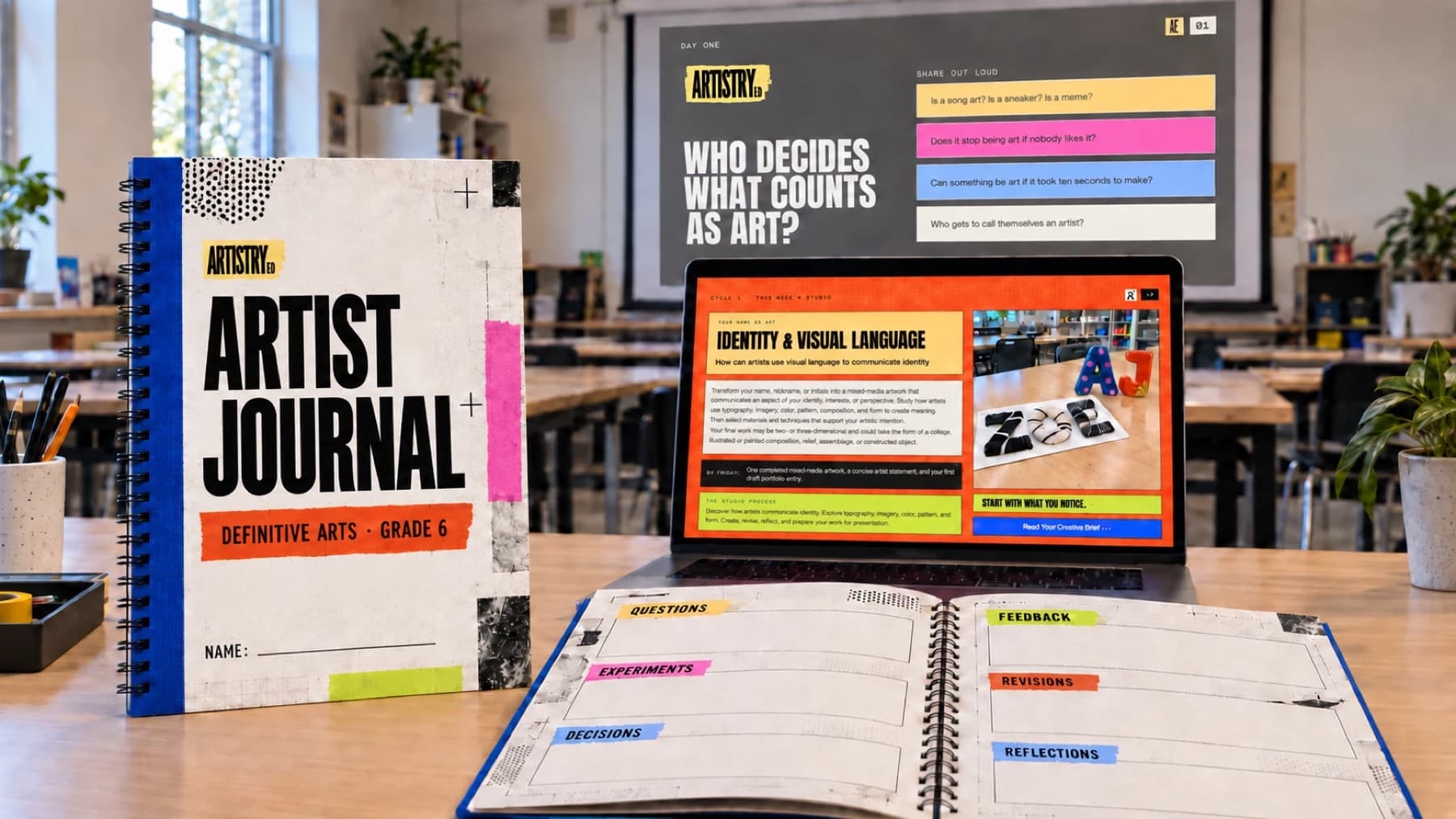
An Artistry Ed Artist Journal, a lesson on a laptop and the day-one question on a classroom projector
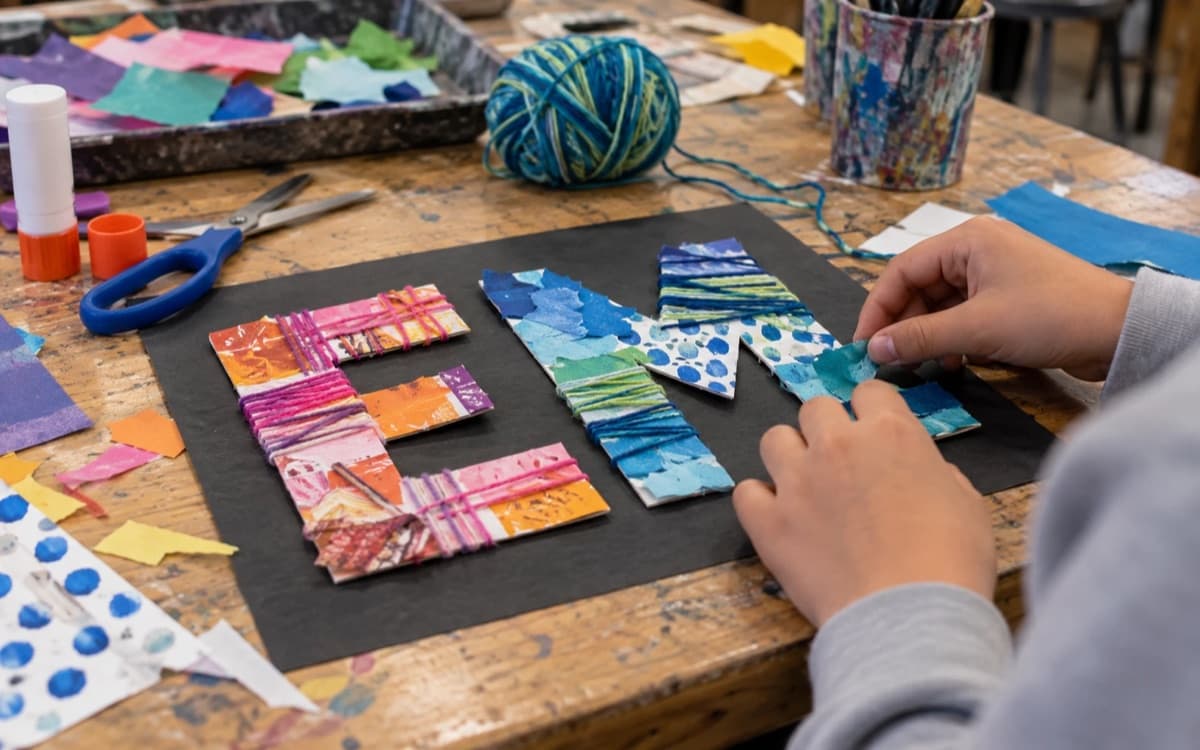
A student's mixed-media name artwork
Day 3 · Create5:00
Day one starts with a question

Who decides what counts as art?

Skill level isn't the entry requirement. Students explore what moves them, make something of their own, and learn to explain it.

The studio week

Five days. One finished piece.

Every module runs a five-day studio rhythm, so students know what to expect and teachers can plan with confidence. Tap a day.

Day 1 · Discover
Students

Look closely at working artists and the big idea behind the module.

Teacher

Present the slides and lead the discussion with the script.

For teachers

Built for the classroom.

Ready-to-teach lessonsSlides, teacher notes and timing for every day.
A gallery for every studentStudents share finished work and explain their choices.
Simple for schoolsEasy student sign-in, and private by design.
Present 1 / 35:00
Day oneWho decides what counts as art?
Share out loudIs a song art? Is a sneaker? Is a meme?Does it stop being art if nobody likes it?Can something be art if it took ten seconds to make?Who gets to call themselves an artist?
Teacher notesPut the question up before you say anything. Let students answer out loud.
Try it: press Next and start the timer.
Grade 6 · Artistry Ed I: Definitive Arts

Made in the studio.

Visual art, sound, performance and curation. The 6th grade course has fourteen five-day modules, each ending in a finished piece students present. Here are the first six.

Identity & Visual LanguageMixed media
Module 1Identity & Visual Language

Create a mixed-media artwork using your name or initials to communicate an aspect of your identity, interests, or perspective.
Process & ReflectionProcess & statement
Module 2Process & Reflection

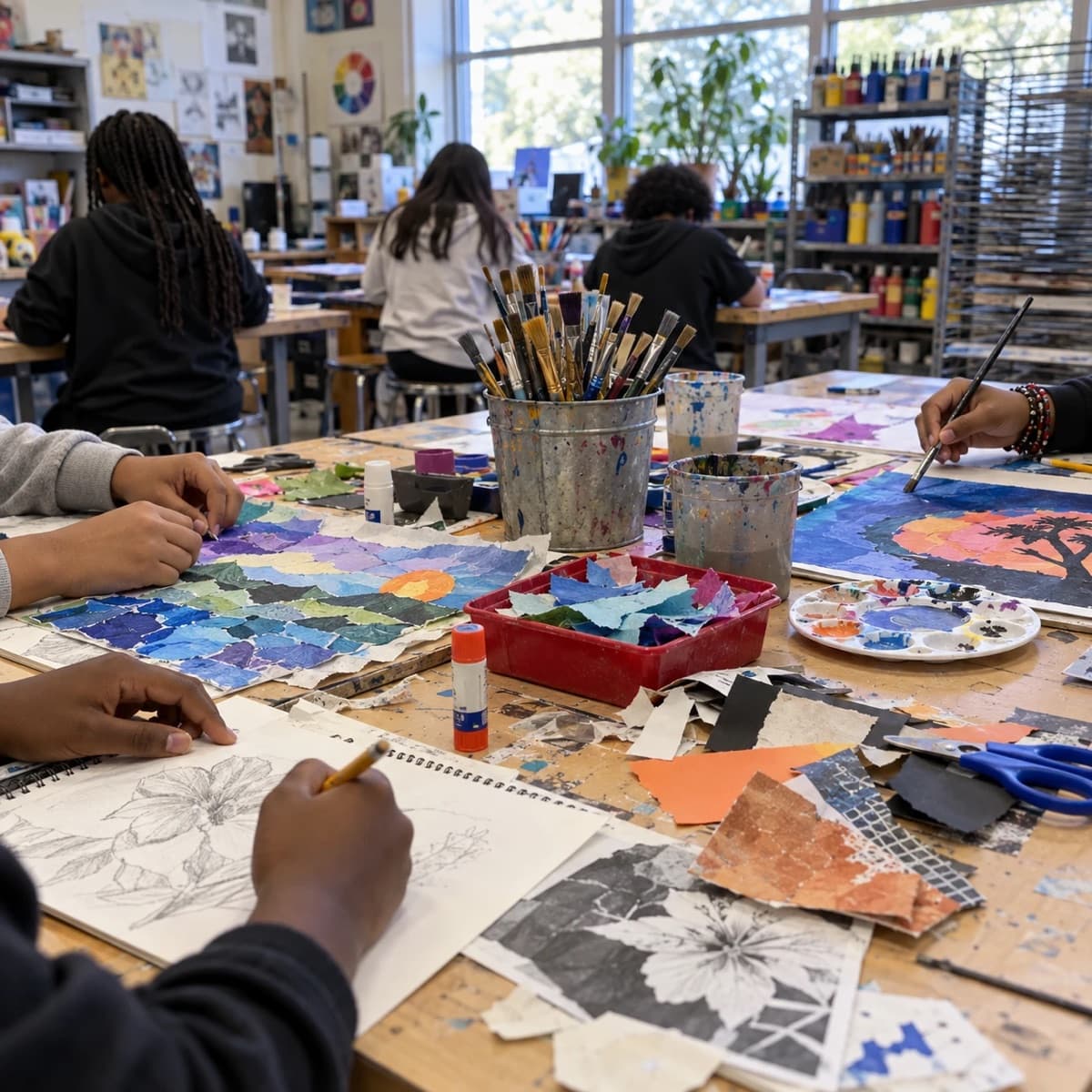
Document your process, write an artist statement, and present your work to an audience.
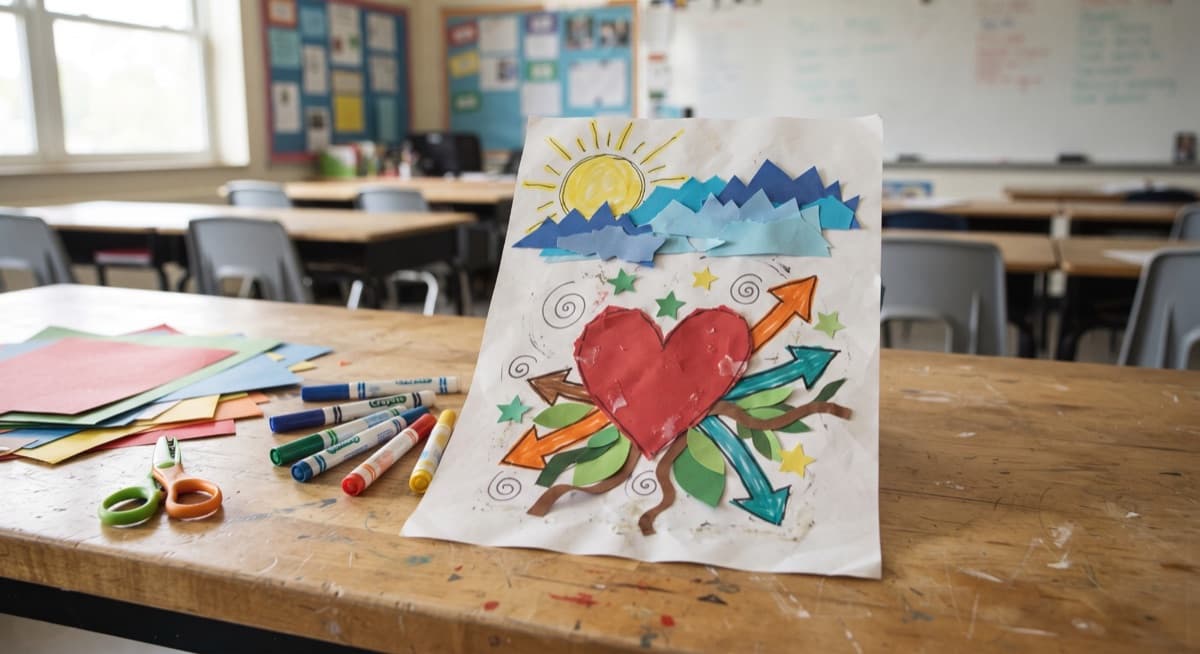
Visual CommunicationVisual message
Module 3Visual Communication

A visual composition that communicates an idea or message without relying on explanatory text.
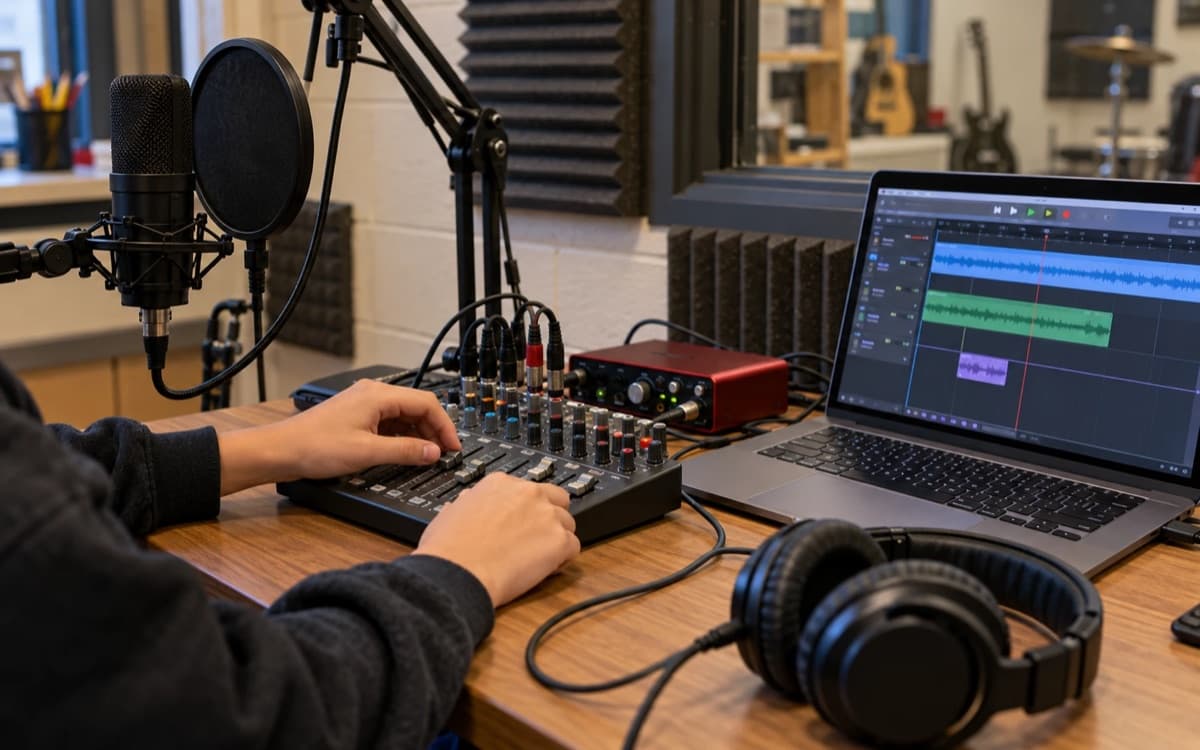
Sound & ExpressionSound
Module 4Sound & Expression

A short sound piece that communicates an identity, mood, memory, or point of view.
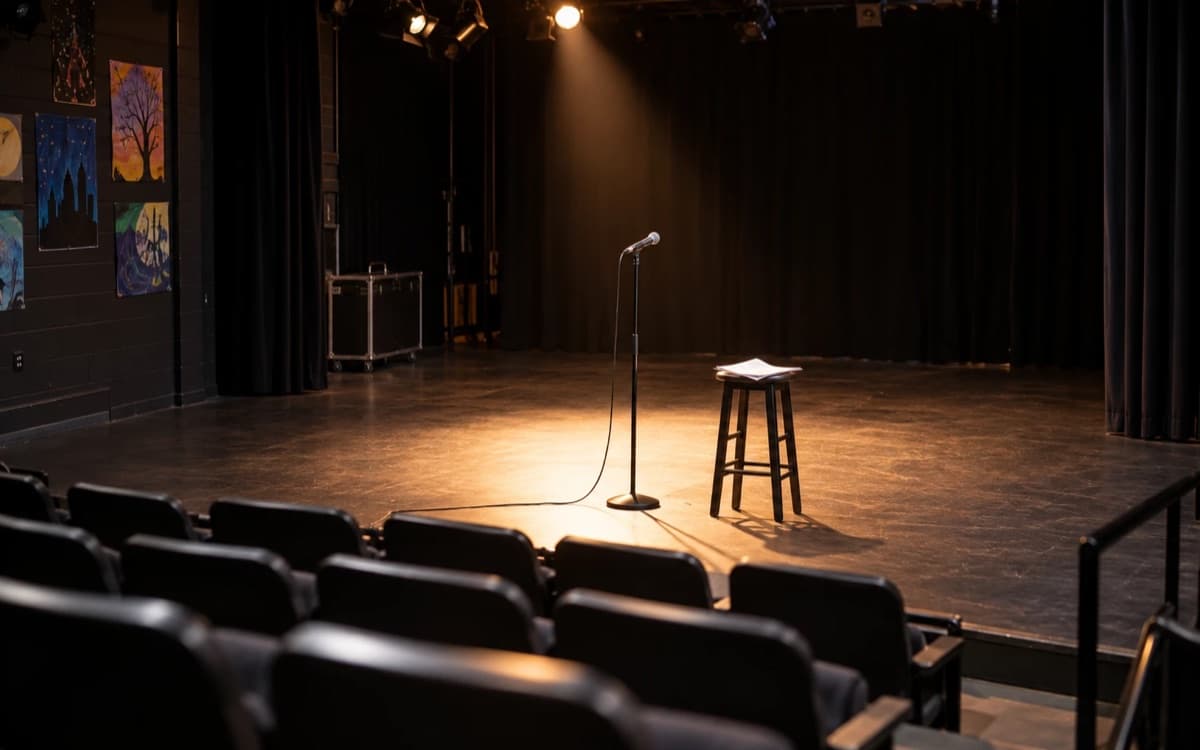
Narrative & PerformanceSpoken word
Module 5Narrative & Performance

A 45–60 second original monologue or spoken-word piece.
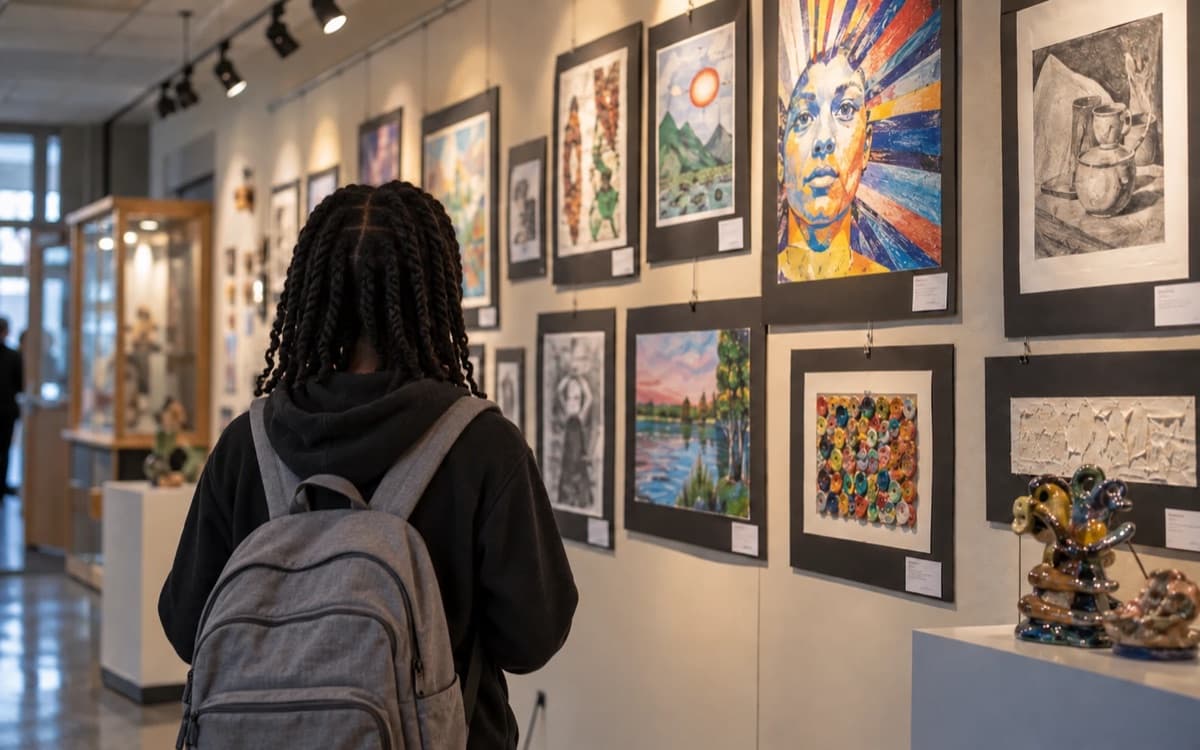
Curation & Artistic VoiceCuration
Module 6Curation & Artistic Voice

Curate two works, refine your artist statements, and deliver a short artist talk.

7–14
8 more modules in Grade 6Music, dance, film, podcasting, writing and voice, ending in an independent studio and a final exhibition.
  • 7Instrumental Music & Production
  • 8Dance & Choreography
  • 9Photography, Film & Animation
  • 10Podcasting & Audio Production
  • 11Creative Writing & Spoken Word
  • 12Vocal Music
  • 13Independent Studio
  • 14Portfolio & Exhibition
Sneak peek · Grades 6–8

Three years. One artistic voice.

Artistry Ed grows with students, from first experiments in 6th grade to a signature body of work by 8th.

Grade 6Available now
Artistry Ed IDefinitive Arts

Fourteen five-day studio modules across visual art, music, dance, media, writing and performance, ending in a final exhibition.

Grade 7Sneak peek
Artistry Ed IIExploratory Arts

New mediums and bigger experiments, so students can try on different art forms and find the ones that fit them.

Grade 8Sneak peek
Artistry Ed IIISignature Arts

Students go deep in the work that's theirs, building a signature portfolio and presenting it like working artists.

Bring Artistry Ed to your school

We'll walk you through the lessons, the gallery and setup, and answer your questions about pricing and privacy.